A football, which is 8cm in diameter and made of foam, so cannot be used to play football
A basketball, which is 8cm in diameter and made of foam, so cannot be used to play basketball
A tennis ball, which is 8cm in diameter and made of foam, so can be used to play tennis if you don’t mind the ball not bouncing or travelling far enough because it has the wrong weight and ballistic properties
A baseball, which is 8cm in diameter and made of foam, so cannot be used to play baseball
Recently we got a new treadmill thing, which allows you to go for a walk inside your house. This is useful for exercise and also for avoiding scenery if the natural world is disgusting to you.
I took a look at the instructions to see if there was any important information there that wasn’t immediately obvious when looking at the four-button control panel (on, off, faster, slower). It told me some vital information about the dimensions and operating parameters of the machine.
And then, at the bottom, it told me something else.
I don’t know what it’s going to do to me. I don’t know what its plan is.
You might think you know how to speak the language of Great Blighty, but just because you picked it up as a child doesn’t mean you’ve fully grasped its intricacies. Thankfully the internet is full of helpful advice for those trying to master British English, and in this post I’m going to round up some of the key findings for you.
Food
Every guide seems to begin with food words. In Britain, eggplants are called aubergines and zucchini are called courgettes. Then we have some more useful translations from YMT Vacations:
Word
Translation into British
Chips
Crisps
Beer
Jar
Cheetos
Puff snacks
Doritos
Doritos
Slices of cured ham
Rashers
Vogue add that flapjacks are “not pancakes”, though they have no information about what flapjacks actually are.
Nouns
What do you call that thing? If you want to avoid just pointing at something, you need to know its name. Thankfully Vogue knows a lot more about what things are called.
Word
Translation into British
Toilet
Loo
Elevator
Lift
Uniform
Kit
Pregnancy
Up the Duff
Quintain Living helpfully throw in some more common nouns that you might require. Don’t make the mistake of using the words on the left if you want to avoid being laughed at.
Word
Translation into British
Kiss
Snog
Man
Bloke
Toilet paper
Bog roll
Police officer
Rozzer
On that final point, YMT Vacations also helpfully share their understanding that the common British term for a police car is “jam sandwich”.
Idioms and phrases
If you really want to speak like a native Britisher, you should sprinkle some common Brit-sayings into your conversation to convince the locals that you too are from Fair Albion’s green and pleasant shores. Vogue have soaked up the culture and offer the following extensive list.
Word
Translation into British
Weird
Dodgy
Cray
Bonkers
Gross
Gammy
Ugly
Butters
Dating
Courting
YMT Vacations don’t know many common phrases, but they do know that if the weather is bad you should say it’s “blowing a hooley”.
We will give the last word to Quintain Living, though, who recommend avoiding the heavily Americanised phrase “go away”. Instead you should tell British people to “sod off”.
With all this advice you should have no trouble fitting in to British society and you’ll be the King of Downton Abbey in no time. Pip pip!
When we bought our house five years ago, we moved in to a former military town where all the army things were being steadily demolished and replaced with new housing estates. As part of this new utopian vision, we kept being told that there would be a new town centre, which would one day materialise on the big patch of derelict space in the middle of town five minutes’ walk from our new place.
Over the years we’ve kept hearing stories about all the brilliant things that will be there once they build it, putting a range of wonderful conveniences on our doorstep. But the big derelict space continued to be big, derelict and empty. Would we even live to see this fabled wonderland, this Eden of small town commerce?
Well, finally, things are changing. A couple of months ago work started to build the steel frames of the first building, which will be a big Sainsbury’s, soon to be surrounded by other things as part of a phased construction project. And in the last couple of weeks, with people and cranes and diggers on site, new signs have gone up to advertise the company building it. I couldn’t be more delighted. Look who it is!
As yet, though, no sign of their cufflinks or their children. I’ll keep looking.
We all know how slow bureaucracy can be. Fill in the forms and wait years for action. Call every day only to be put on hold with no explanation. But eventually it all pays off.
We all know that fathers of grown ups are Big. Our lives have been overseen by these titans of parenthood. But one among us has reached this status for themselves, and now – despite cutbacks in the civil service and the lack of urgency in the postal system – his official certificate has arrived.
Now that I am visually challenged, I have come to understand the true value of seeing things. For so many years I took for granted my ability to just point my eyes at something and see it properly. Now my feeble oculus needs prosthetic assistance, I realise what a gift sight can be. I’ve been a fool all these years. An ignorant fool. An ignorant fool with 20:20 vision.
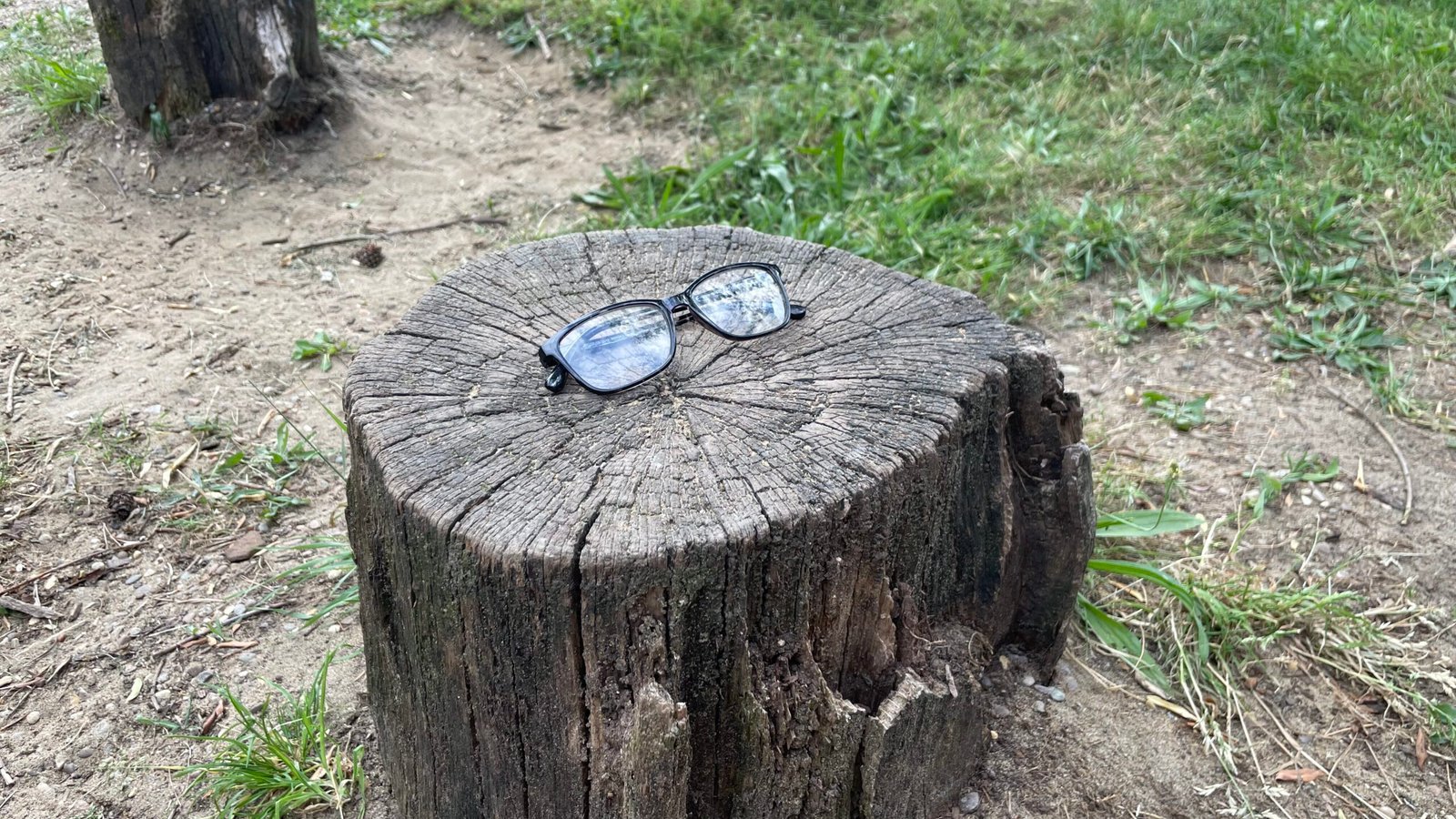
That is why I have started a campaign: Public Glasses.
My new charitable organisation will place glasses at strategic points across the UK, so that everyone can look at things no matter where they are.
No longer will you need to squint at a blurry landscape or the fuzzy remnants of an Iron Age hill fort. Whenever you feel the need to direct your peepers at something, just grope around at your barely identifiable surroundings, and there you’ll find a pair of specs, placed there for the benefit of the nation by Public Glasses.
I’ve made a start by filling my local park with glasses, and I encourage you to do the same. Then, when you’ve done that, donate all your money to my charity. Together we’ll bring the gift of eyesight to the masses.
Lately I’ve been having a lot of fun watching Guy Montgomery’s Guy Mont-Spelling Bee, which is on iPlayer and I think BBC3. It’s an Australian panel show and it’s really silly. (Guy Montgomery is a New Zealander, and I think it’s run in NZ for several series already, but only the Aussie version is on iPlayer.) It’s genuinely great.
Guy Montgomery clearly knows how dumb the show is and can’t hide how much his stupid jokes and tasks make him laugh, which I find very funny. His assistant is Aaron Chen (I’ve seen him before in Fisk, which you should check out too, it’s a very dry Australian sitcom that we blasted through in no time), who brings an enormous amount of awkwardness to everything he does.
If you need an explanation to get you started, it’s nominally a spelling competition where the guests have to spell words to earn points. But the rounds are all different every time, they’re all enjoyably stupid (spell your hat, spell the name of the random audience member, spell the celebrity name while doing an impression of the celebrity) and some are explicitly designed to give the guests a really hard time (spell the ethnicity of the mystery guest). I don’t know who the guests are, with the exception of Tim Minchin, but that doesn’t seem to matter. They’re just comedians falling into elaborately built spelling traps.
Please enjoy this thing I have also enjoyed. Thank you.